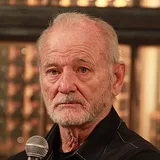
Actor
Bill Murray
A fixture at the AT&T Pebble Beach Pro-Am for decades, and its pro-am winner in 2011 alongside D.A. Points.
Advertising disclosure. This independent comparison website helps consumers choose the best available product that meets their needs. We offer a high quality advertising service by only featuring established brands from registered operators in our reviews. Please note that while we try to provide you with up-to-date information, we do not compare all operators on the market.
Affiliate disclosure. The main focus of golfbetting.ca is to provide you with objective online casino reviews and guides. To sponsor our model, we include affiliate links in our content. If you register through such a link, we will receive a small commission at the cost of the casino; this does not affect the terms of your own deal. We do not compromise on the quality of our service and list only registered operators that have been checked and tested based on our methodology.
People and culture
Golf collects people from outside itself more successfully than almost any other sport. The handicap system is most of the reason, and four hours is the rest.

Handicapping is golf's quiet invention. A number derived from your recent scores says how many strokes above par you usually play, and in a match the better player simply gives that difference away. The result is that a player in their first season and a player who has never been above par can have a match that comes down to the last green.
Almost no other sport can do this. You cannot handicap a tennis match into fairness, and you certainly cannot handicap a football team. It is why golf has always spread through business, politics and entertainment, and why a round is so often the setting for a conversation that had nothing to do with golf.
The second reason is duration. A round is four to four and a half hours, most of it spent walking beside one other person, with intermittent interruptions requiring concentration. That is an unusual social structure, and people who have no interest in the sport itself often turn out to be very interested in the structure.
It is also why the game holds people for life. It is playable at seventy in a way that almost no competitive sport is, and a player's peak in terms of enjoyment tends to arrive long after their peak in terms of scoring.
Very little of it resembles the Sunday afternoon on television. There is no salary and no contract. A player holds a tour card for a season, earned through a qualifying series or a feeder tour, and has to re-earn it. Travel, accommodation, coaching and the caddie's retainer all come out of the player's own pocket, and a missed cut pays nothing at all.
The economics only work at the top. Inside the top fifty in the world, prize money and endorsements make it a career; a few hundred places below that, a player is running a small business that loses money in a mediocre year. This is worth remembering when a leaderboard shows an unfamiliar name in contention, because what is on the line for them is not comparable to what is on the line for the favourite.
The most useful habit is to watch what a player does rather than what they shoot. Finishing position is a poor measure of form over a small sample: a player can gain strokes off the tee and on approach for three weeks and miss three cuts because the putts did not drop.
Watch for the profile instead. Who drives it long and crooked, who drives it short and straight, who is deadly from a hundred yards, who cannot putt on fast greens. Those tendencies are stable across a season, they explain why the same names contend at the same courses year after year, and they are visible to anyone paying attention without any subscription data.
The rankings page carries the current world top ten, taken straight from the public feed, and explains what the two-year average does and does not measure. The number one as of 4 October 2026 is Scottie Scheffler.
Golf's pull reaches well beyond the tour. These are four of the best-known names from outside the sport who play seriously, and the courses they are tied to.
Actor
A fixture at the AT&T Pebble Beach Pro-Am for decades, and its pro-am winner in 2011 alongside D.A. Points.
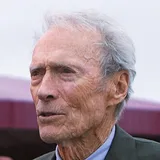
Actor and director
Owns a private club in the hills above Carmel, designed by Jay Morrish and opened in 1999, a short drive from Pebble Beach.
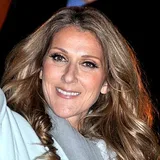
Singer
Co-owned a golf club north of Montreal with her late husband René Angélil.

Singer and actor
Bought and restored a public course near Memphis, reopening it as one of the first eco-certified courses in the region.
Photos via Wikimedia Commons: Bill Murray by Timelessblue, CC BY-SA 4.0; Céline Dion by Georges Biard, CC BY-SA 3.0; Justin Timberlake by Gage Skidmore, CC BY-SA 3.0; Clint Eastwood by Lance Cpl. Melissa I. Ugalde, Public domain.
Canadian golf has had a modest but persistent presence at the top of the professional game, and a single afternoon in 2023 did more for its profile than a decade of steady results: Nick Taylor's win at the Canadian Open ended a drought stretching back to 1954. That is why the national open carries a weight here out of proportion to its place in the calendar.
On the women's side Brooke Henderson has been the most successful Canadian professional in the sport's history by tournament wins, and did it while still in her twenties.
That national attention has a measurable effect. Domestic money shortens a domestic name, so a Canadian in the field at a Canadian event is usually priced below what the golf alone would justify. Recognizing a sentiment premium is the first practical skill in reading golf odds, and the golf betting guide sets out which markets expose it most. The world golf rankings are the quickest check on whether the premium is deserved, and the golf betting sites in Canada we compare let you shop the same player across several books before you settle on a price.
Common questions
Because it is one of the few competitive sports a beginner and an expert can play together honestly, thanks to the handicap system, and because a round is four hours of conversation with an activity attached.
It is also playable into old age, which very few competitive sports are.
It is a number representing how many strokes above par you typically play, calculated from your recent scores. In a match, the better player gives the difference in strokes to the weaker one.
The effect is that a first-year player and a scratch golfer can have a genuinely close match, which is unusual in sport and is a large part of why golf spreads socially.
Almost always through qualifying schools and developmental tours rather than a draft. A player earns a card by finishing high enough in a qualifying series or by accumulating enough money on a feeder tour.
Cards are held for a season and must be re-earned, which is why professional golf is far less secure than the prize money at the top suggests.
Brooke Henderson is the most successful Canadian professional golfer by tournament wins, and on the men's side Corey Conners, Nick Taylor and Taylor Pendrith are the regular tour presence.
Nick Taylor's win at the 2023 Canadian Open was the first by a Canadian since 1954, which explains why the RBC Canadian Open carries the weight it does here.
The top fifty do. Below that the economics are brutal: there is no salary, entry to events is not guaranteed, travel and caddie costs come out of your own pocket, and a missed cut pays nothing at all.
A player ranked around two hundredth in the world is running a small business at a loss in a good year.
golfbetting.ca sets no analytics or advertising cookies. If that ever changes, nothing non-essential runs until you accept. See our Privacy Policy and Terms of Use.