Advertising disclosure. This independent comparison website helps consumers choose the best available product that meets their needs. We offer a high quality advertising service by only featuring established brands from registered operators in our reviews. Please note that while we try to provide you with up-to-date information, we do not compare all operators on the market.
Affiliate disclosure. The main focus of golfbetting.ca is to provide you with objective online casino reviews and guides. To sponsor our model, we include affiliate links in our content. If you register through such a link, we will receive a small commission at the cost of the casino; this does not affect the terms of your own deal. We do not compromise on the quality of our service and list only registered operators that have been checked and tested based on our methodology.
The best golf courses in Canada and around the world, and how to get on them
The best golf courses in Canada, plus six abroad: fourteen courses worth planning a trip around, with the two facts most lists leave out. Whether you can get on, and what the ground actually asks of you.
Stanley Thompson built most of what Canada is known for between the wars, and a modern pair on Cape Breton added the links golf the country never had. Five of the eight below take visitors, which makes the best golf courses in Canada unusually easy to play by world standards.
Cabot Cliffs
Inverness, Nova Scotia
Built along the cliffs of Cape Breton, with six holes on the water and a par three played straight out over the sea. It shares a property with Cabot Links, so a trip usually means both.
Type
Links
Access
Resort, open to guests
Par
72
Opened
2015
Architect
Bill Coore and Ben Crenshaw
Cabot Links
Inverness, Nova Scotia
Canada's first true links, laid out on reclaimed mine land beside the town. Firm ground, low wind-cheating shots and a walk that never leaves the coast.
Type
Links
Access
Resort, open to guests
Par
70
Opened
2012
Architect
Rod Whitman
Highlands Links
Ingonish, Nova Scotia
Thompson called it his mountains and ocean course. It runs from the sea inland along a river and back, and the routing asks for more imagination than power.
Type
Links and parkland
Access
Public, in a national park
Par
72
Opened
1941
Architect
Stanley Thompson
Banff Springs
Banff, Alberta
The most photographed golf hole in the country is here: the fourth, played across a glacial lake to a green set into the rock. Altitude adds carry, which flatters everybody.
Type
Mountain
Access
Resort, open to guests
Par
71
Opened
1928
Architect
Stanley Thompson
Jasper Park Lodge
Jasper, Alberta
Thompson's first mountain course and still the gentler of the pair. Wide corridors, elk on the fairways and a routing that uses the lake rather than fighting it.
Type
Mountain
Access
Resort, open to guests
Par
71
Opened
1925
Architect
Stanley Thompson
St. George's Golf and Country Club
Etobicoke, Ontario
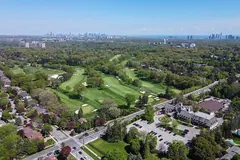
A regular host of the Canadian Open and the most respected championship test in the country. Severe green complexes on ground that moves more than a city course should.
Type
Parkland
Access
Private
Par
71
Opened
1929
Architect
Stanley Thompson
Hamilton Golf and Country Club
Ancaster, Ontario
Colt's Canadian work, on escarpment land that gives the holes natural shape. It has hosted the Canadian Open more than once and still measures under seven thousand yards.
Type
Parkland
Access
Private
Par
70
Opened
1914
Architect
Harry Colt
Capilano Golf and Country Club
West Vancouver, British Columbia
Cut into the mountainside above the harbour, so the round runs downhill for nine holes and back up for nine. The views cost you concentration.
Type
Parkland
Access
Private
Par
72
Opened
1937
Architect
Stanley Thompson
Famous golf courses in the world, and who can play them
The six famous golf courses in the world that explain what golf can be. Four of them take visitors, one through a daily ballot.
Course
Where
Type
Access
Par
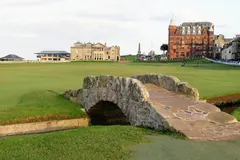
Old Course at St Andrews The reason a round is eighteen holes. Publicly owned, playable by ballot, and still the plainest looking great course in the world.
Fife, Scotland
Links
Public ballot
72
Royal County Down Dunes, gorse and blind tee shots under the Mourne Mountains. Regularly named the finest links anywhere, and the front nine is the reason.
Newcastle, Northern Ireland
Links
Visitor times
71
Pebble Beach Eight holes on the cliff edge of Carmel Bay. Small greens punish approach play, and the wind decides how small.
California, United States
Coastal
Resort, open to guests
72
Royal Melbourne, West Alister MacKenzie's sandbelt masterpiece. Fast ground, enormous bunkers and greens that reward the player who thinks two shots ahead.
Victoria, Australia
Sandbelt
Private
72
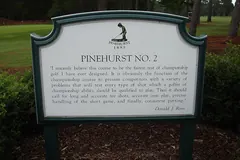
Pinehurst No. 2 Donald Ross's crowned greens repel anything but a precise approach. The restored sandy waste areas made it look older and play harder.
North Carolina, United States
Sandhills
Resort, open to guests
70
Augusta National The one course most people can describe hole by hole and almost nobody plays. Speed and slope on the greens, not length, is what it defends with.
Georgia, United States
Parkland
Private, invitation only
72
Where the game is played
The world's most famous golf courses, and who has played them
Ordered by length. The courses that host the majors, the ones Canadians travel for, and the names that made them famous.
#CourseLengthKnown forFamous names who played there
1Augusta National ↗Augusta, Georgia, USAPrivate, invitation only7,555 ydpar 72LongestHome of the Masters every April since 1934Bobby Jones (co-founder), Dwight D. Eisenhower (member), Tiger Woods (five Masters)
2Pinehurst No. 2 ↗Pinehurst, North Carolina, USAResort, open to guests7,548 ydpar 70Four US Opens, including 2024Payne Stewart (1999 US Open), Michelle Wie (2014 US Women's Open), Bryson DeChambeau (2024 US Open)
3Old Course, St Andrews ↗St Andrews, ScotlandPublic, daily ballot7,313 ydpar 72The home of golf; 30 Open ChampionshipsOld Tom Morris, Bobby Jones, Tiger Woods (2000 and 2005 Opens)
4Pebble Beach Golf Links ↗Pebble Beach, California, USAResort, open to guests7,075 ydpar 72Six US Opens and the annual Pro-AmBing Crosby (the Crosby Pro-Am), Clint Eastwood (co-owner), Jack Nicklaus (1972 US Open)
5Royal County Down ↗Newcastle, Northern IrelandVisitor tee timesabout 7,000 ydpar 71Irish Open and the 2007 Walker CupRory McIlroy (2007 Walker Cup)
6Hamilton Golf and Country Club ↗Ancaster, Ontario, CanadaPrivateabout 7,000 ydpar 70RBC Canadian Open host, 2019Rory McIlroy (2019 RBC Canadian Open champion)
7St. George's Golf and Country Club ↗Etobicoke, Ontario, CanadaPrivateabout 7,000 ydpar 70RBC Canadian Open host, 2010Carl Pettersson (2010 RBC Canadian Open champion)
Lengths are the championship set-up at the most recent major played there; courses without a recent major are shown as about 7,000 yards.
Two courses of the same length can be four shots apart for the same player, and the difference is almost never the yardage on the card. What matters is the ground, the wind and where the architect put the trouble.
Firm ground changes the shot, not just the distance
On a links the ball lands and runs, so the approach is often played short of the green deliberately. That is not a defensive choice, it is the shot the ground asks for, and a player who only knows how to fly the ball to the flag will struggle no matter how well they strike it.
Altitude flatters everybody
Thin mountain air means less drag, so the ball carries further at Banff and Jasper than the same swing produces at sea level. Roughly one club over eighteen holes, more on the longest shots, and it is the one place where an amateur gets a free gift.
Trees punish differently from bunkers
A bunker costs you half a shot and gives you a clear escape. A mature parkland corridor costs you the hole, because the only shot available is sideways. This is why courses like St. George's and Hamilton still defend themselves against modern distance without stretching past seven thousand yards.
Public access: which courses you can actually book
Most lists of the best golf courses rank by reputation and stop there, which is how a reader ends up planning around a private club. Public access splits into three kinds. Public in the strict sense means anybody can book a tee time, and Highlands Links, inside Cape Breton Highlands National Park, is the clearest example of public golf courses in Canada at this level. Resort access means you stay, or pay a resort green fee, and that covers Cabot, Banff Springs and Jasper. Private means a member has to take you.
Abroad the pattern is similar with one famous exception. The Old Course at St Andrews is a public course run by a trust, and a share of its tee times goes to a daily ballot drawn the afternoon before. Augusta National sits at the far end: nobody books it, however much they offer. If public access is the filter that matters to you, the public golf courses in Canada on this page are a better bet than half the famous golf courses in the world.
Planning a Canadian golf trip
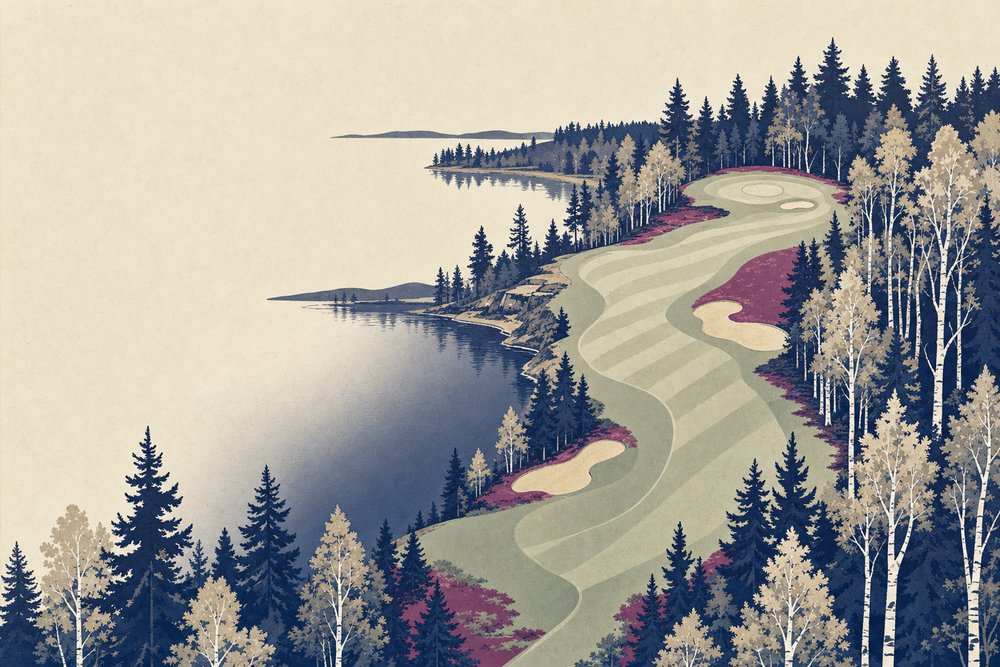
Canada's best courses are cut through forest, rock and water.
The season runs roughly May to October, and late September rewards the patient: firm ground, fewer people, lower rates and the colour turning on Cape Breton. Book resort tee times months ahead for July and August, and carry rain gear regardless of the forecast on any coastal course.
If you are travelling without clubs, say so when you book, not on the morning. Rental sets exist nearly everywhere, but the good ones are finite. The equipment guide covers what a rental set should include and what to check before you walk to the first tee.
Course knowledge is also the most transferable thing a spectator can have. Firm ground and a crosswind reward a completely different player from a soft parkland week, which is why the golf betting guide puts course fit ahead of form, why the world golf rankings only tell half the story in a links week, and why reading a price starts with asking what the ground is asking of the field. When the tour visits one of the best golf courses on this list, the golf betting markets usually open with a price on how the course, not the field, will play.
Common questions
Questions about golf courses
01
What is the best golf course in Canada?
By reputation it is a short list, not a single name: Cabot Cliffs and Highlands Links on Cape Breton, St. George's and Hamilton in Ontario, and Banff Springs in Alberta.
They ask completely different questions. Cape Breton is links golf on firm ground in wind, Banff is mountain golf where altitude adds carry, and the Ontario pair are classic parkland championship tests.
02
Which great Canadian courses can the public actually play?
Most of the famous scenery is playable. Cabot Cliffs, Cabot Links, Banff Springs and Jasper Park Lodge are resort courses open to guests, and Highlands Links sits inside a national park and takes public bookings.
The championship parkland courses, St. George's, Hamilton and Capilano, are private and generally need a member.
03
Do Canadian courses rent clubs?
Nearly all of them, and the resort courses expect it because so many guests arrive by air. A rental set at a public course usually costs less than a new iron.
Call ahead at the busiest resorts in July and August, since the good sets go first.
04
When is the Canadian golf season?
Roughly May to October in most of the country, with the shoulder months varying by a few weeks either side depending on the province and the year.
Late September is often the best combination of firm ground, thin crowds and colour, and it is also when the rates drop.
05
What makes a links course different from a parkland course?
Links golf is played on sandy coastal ground that drains fast, so the ball runs, the wind is constant and the shot is often along the ground rather than through the air.
Parkland golf is inland on softer ground between trees. The ball stops where it lands, carry distance matters more, and the trouble is vertical rather than horizontal.
golfbetting.ca sets no analytics or advertising cookies. If that ever changes, nothing non-essential runs until you accept. See our Privacy Policy and Terms of Use.