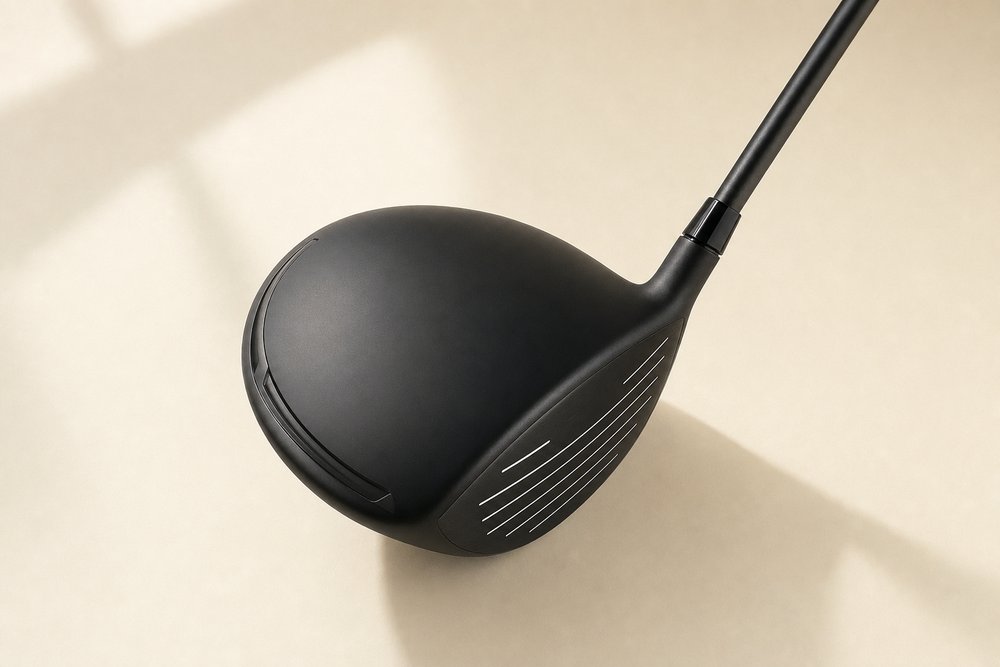
Driver
- Loft
- 9 to 12°
- Standard length
- 45 to 46 in
The longest club in the bag and the only one built to hit off a tee peg for maximum distance.
Advertising disclosure. This independent comparison website helps consumers choose the best available product that meets their needs. We offer a high quality advertising service by only featuring established brands from registered operators in our reviews. Please note that while we try to provide you with up-to-date information, we do not compare all operators on the market.
Affiliate disclosure. The main focus of golfbetting.ca is to provide you with objective online casino reviews and guides. To sponsor our model, we include affiliate links in our content. If you register through such a link, we will receive a small commission at the cost of the casino; this does not affect the terms of your own deal. We do not compromise on the quality of our service and list only registered operators that have been checked and tested based on our methodology.
Equipment and know-how
Most amateur shots are lost before the swing starts, in the choice of club. Which golf club to use in a bunker, from a tight tee, from 140 yards: this is the short version of every decision you will face in a first season, and of what the bag should hold.
The question of which club to play comes up on every shot, and the table answers it for the ten situations a new player meets most. Read it as a starting point, not a law. Your carry distances are your own, and the practice tool exists to let you test them.
| Situation | Club | Why it works |
|---|---|---|
| Tee shot, wide fairway | Driver | The only club built for maximum distance from a tee peg |
| Tee shot, tight or trouble both sides | Hybrid or 5 wood | Twenty yards shorter and far easier to keep in play, which is cheaper than a penalty |
| Long approach, 170 yd plus | Hybrid | Launches higher than a long iron and forgives a strike that is not centred |
| Mid approach, 130 to 155 yd | 7 or 8 iron | The scoring range for most amateurs, where carry is predictable |
| Short approach, under 110 yd | Pitching wedge | Enough loft to stop the ball, little enough to keep it controllable |
| Greenside bunker | Sand wedge | Loft lifts it out fast and the wide sole skims rather than digs |
| Fairway bunker with distance to cover | One club more, struck cleanly | A shallower swing takes ball first, so the distance survives the lie |
| Plugged lie | Lob wedge | The steepest entry angle available digs the ball free |
| Chip from the fringe | 9 iron | Ball runs like a putt after a short carry, which is far easier to judge than a flop |
| On the green | Putter | Roll beats loft, because the ball starts rolling sooner and holds its line |
Two rows cause most of the trouble. Which golf club to use in a bunker depends on where the bunker is: beside the green it is always the sand wedge, but in the fairway with 150 yards to go the same club leaves you 60 yards short. If you only remember one row, remember which club the bunker asks for before you step into it.
Know the bag
Fourteen clubs are allowed in the bag, and they come in six families. Loft sets how high and how far the ball flies; length sets how fast the clubhead travels. The figures below are typical for men's standard clubs with steel shafts in irons and graphite in woods.
The longest club in the bag and the only one built to hit off a tee peg for maximum distance.
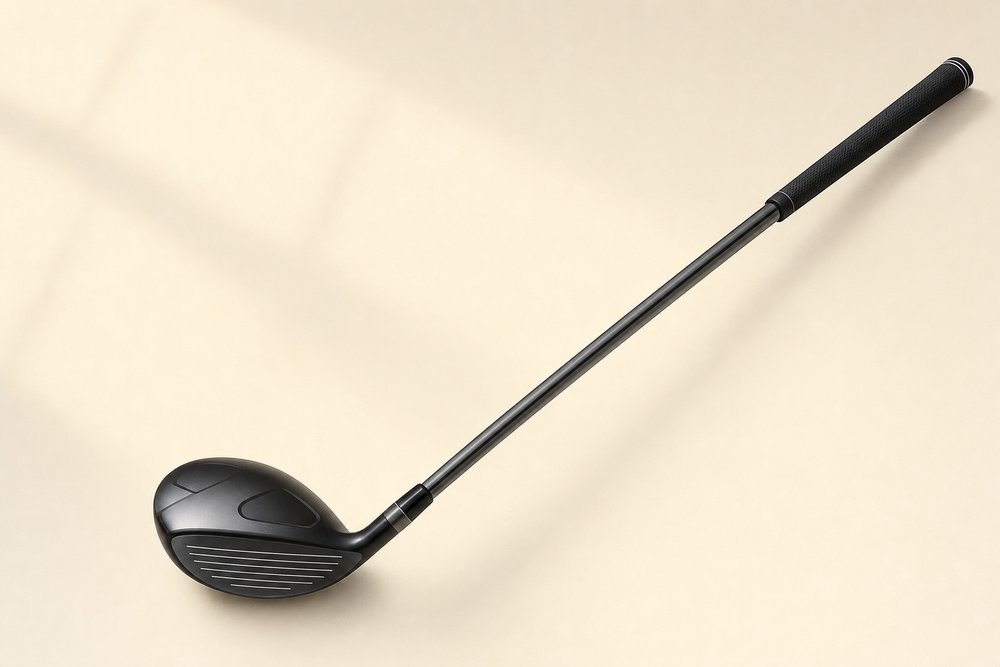
A smaller wood that works off the tee or the fairway for long second shots on par 5s.
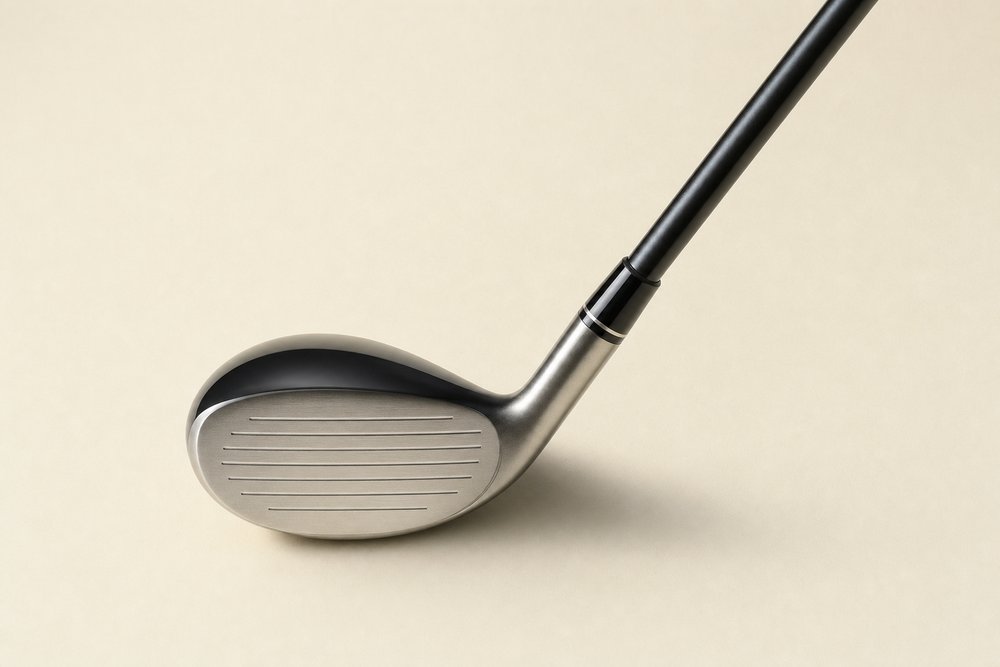
Replaces the long irons. It launches higher and forgives a strike that is not quite centred.
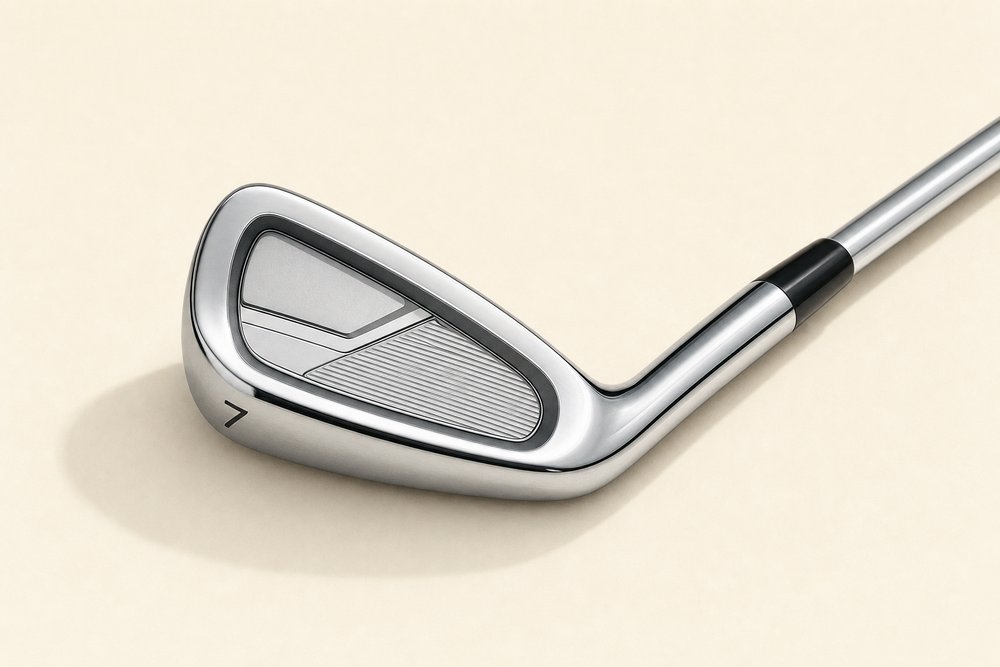
The approach clubs, numbered 4 to 9. Each number up adds about four degrees of loft.
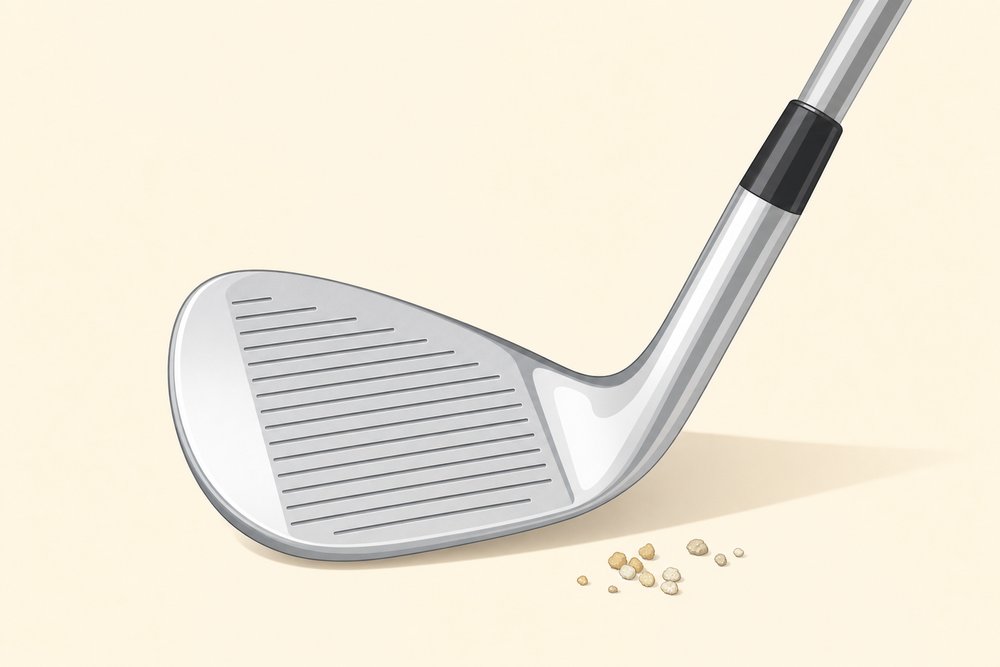
Pitching, gap, sand and lob wedges for short approaches, bunkers and shots that must stop.
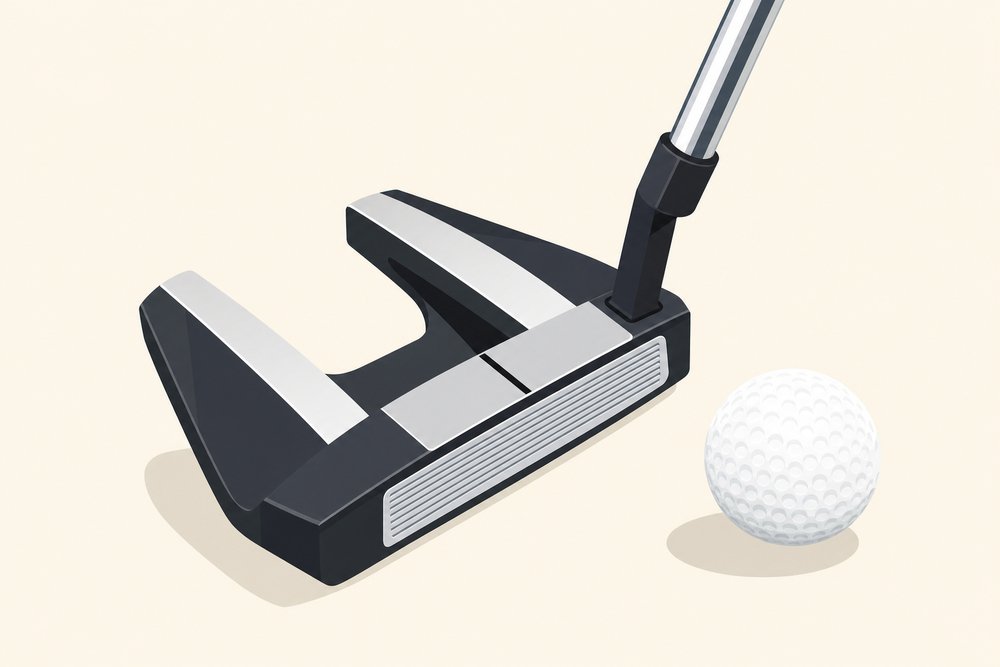
Rolls the ball on the green. The only club used on almost every hole of every round.
Standard clubs are built for a player of about 5 ft 9 in to 6 ft. Taller and shorter players are usually fitted with longer or shorter shafts so that they can stand in a natural posture. This is the rule of thumb fitters start from, before they measure wrist-to-floor distance and watch you swing.
| Your height | Adjustment | 7 iron length |
|---|---|---|
| Under 5 ft 3 in | 1 in shorter | 36 in |
| 5 ft 3 in to 5 ft 8 in | 0.5 in shorter | 36.5 in |
| 5 ft 9 in to 6 ft | Standard | 37 in |
| 6 ft 1 in to 6 ft 3 in | 0.5 in longer | 37.5 in |
| Over 6 ft 3 in | 1 in longer | 38 in |
Dress codes vary, but four things work at almost every Canadian course, from a municipal nine to a private club.
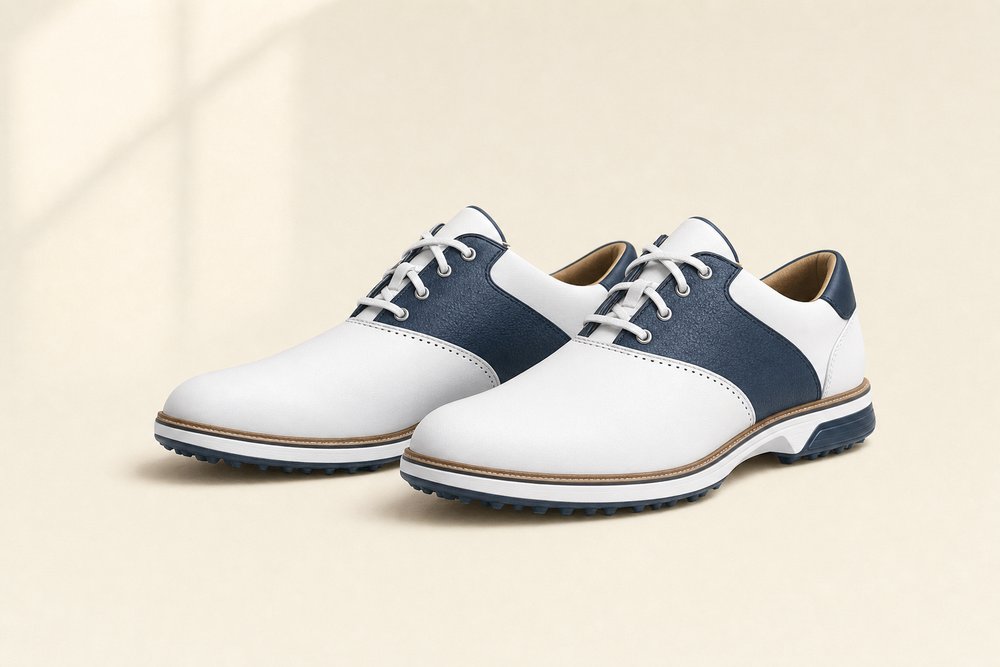
Spikeless soles grip wet grass and are allowed on every course. Most clubs no longer accept metal spikes.
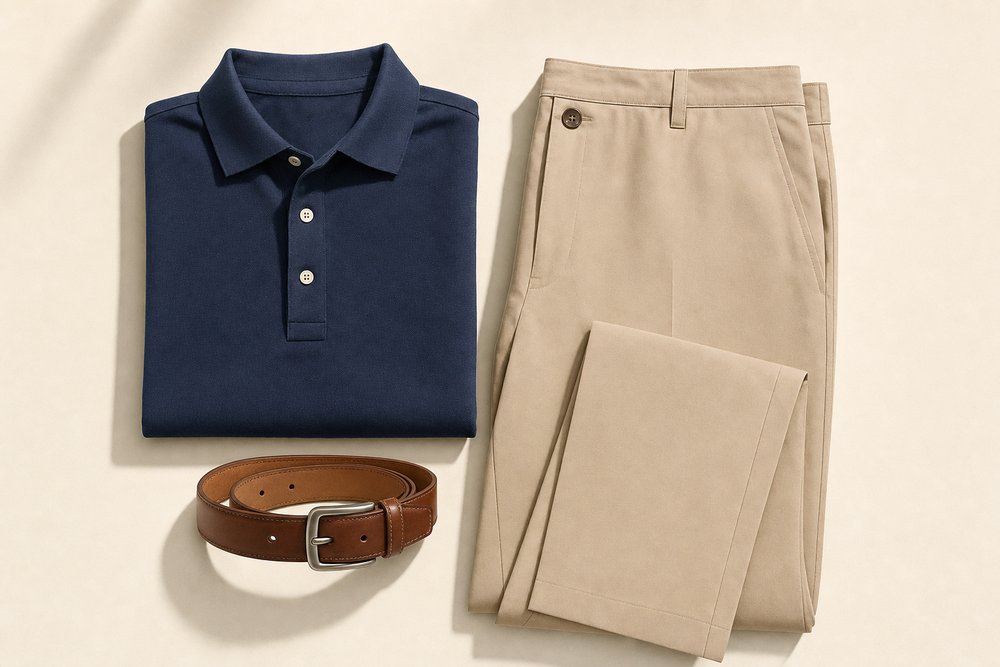
A collared polo with tailored trousers or shorts is the standard dress code. Jeans and sports tops are refused at many clubs.
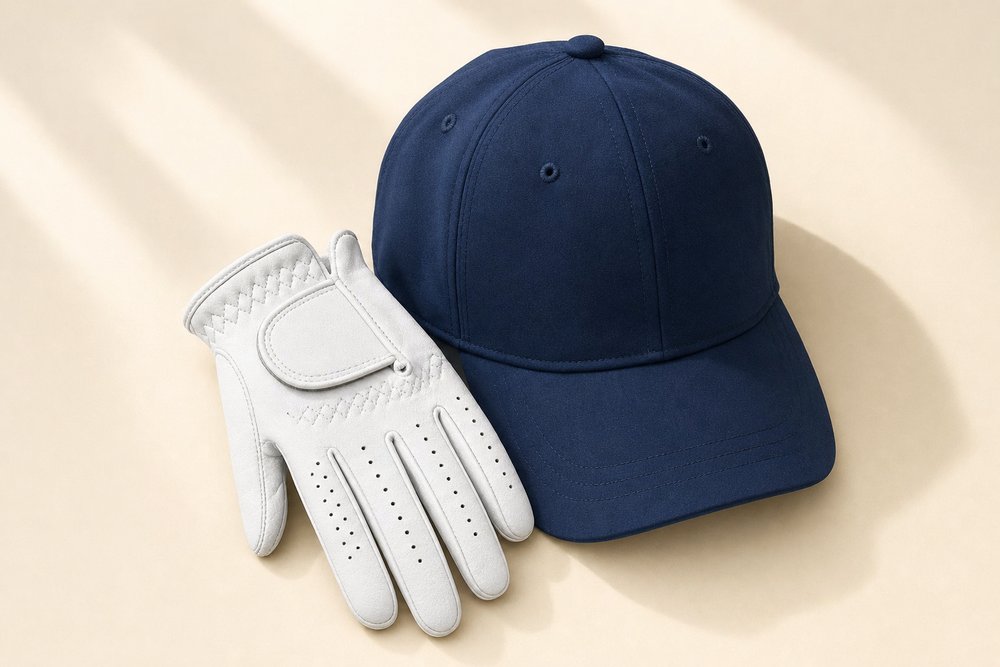
One glove on the lead hand for grip, and a cap or visor against the sun. A glove lasts about ten rounds.
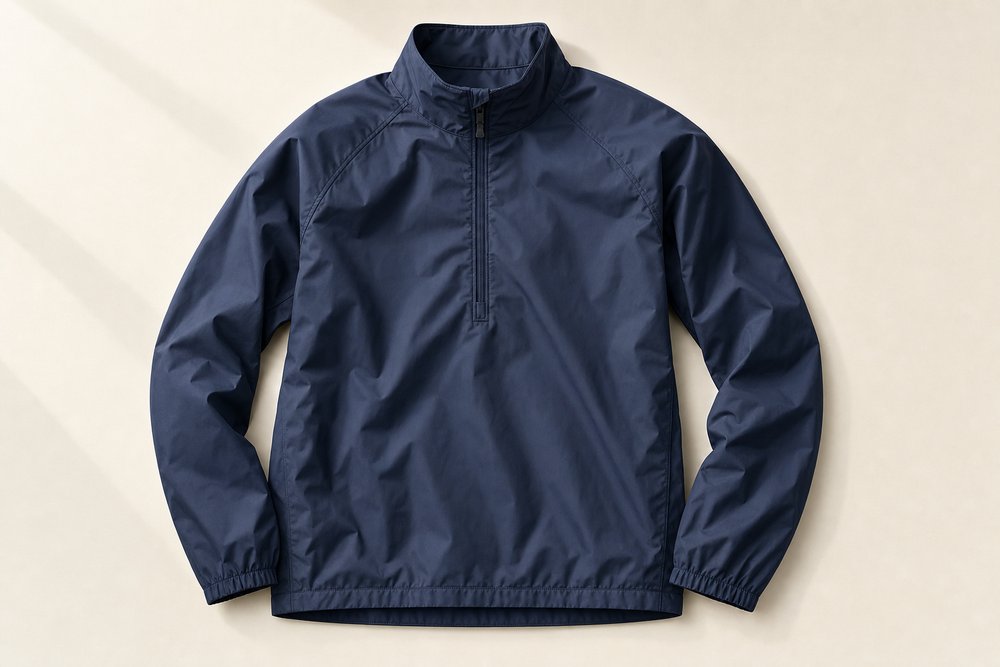
A light half-zip rain jacket that does not restrict the swing. Canadian spring and autumn rounds rarely stay dry.
Ask a shop "what clubs does a beginner need?" and the answer is often fourteen. Seven clubs cover a beginner's whole game: a driver or a 5 wood from the tee, a hybrid for anything long, a 7 iron and a 9 iron for approaches, a pitching wedge and a sand wedge around the green, and a putter. Everything else is refinement, and most good golf clubs for beginners are sold as exactly this kind of half set.
Leaving clubs out is not a compromise, it is a simplification. Fewer clubs means fewer decisions, a lighter bag and a faster round, and none of the three things a beginner most needs to improve, which are contact, direction and pace of play, is helped by carrying a 3 iron. A starter set of seven also costs roughly half a full set, and it is easier to replace one club at a time as your swing tells you what it wants.
Rent first. Renting golf clubs is the default at Canadian resorts, not a sign of a beginner. Nearly every public course in the country has sets available, resort courses expect it because so many guests arrive by air, and the price is usually less than a single new iron. Call ahead in July and August, because the good sets go early.
The moment to buy is arithmetic rather than ambition: when you are playing often enough that a season of renting golf clubs costs more than a starter set. A sensible first purchase is a second-hand set of irons and a new putter, in that order, because the irons will be replaced once your swing settles and the putter will not.
A shaft that is too stiff will cost a beginner more distance and accuracy than any club head will give back, and a lie angle that is wrong will send good strikes offline in a way no amount of practice corrects. A basic fitting session is the cheapest genuine improvement available, and plenty of shops that sell golf clubs for beginners include one with the purchase if you ask.
Everything else in an equipment advertisement is marginal at amateur swing speeds. That is not cynicism, it is the reason a rental set is good enough to learn on.
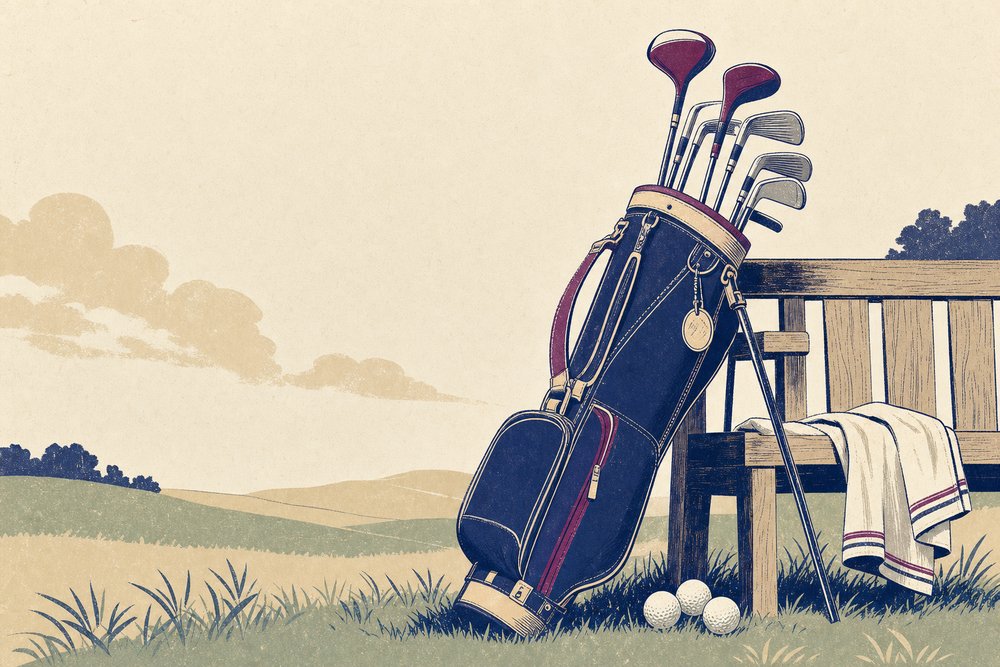
Six balls at minimum and cheap ones, a handful of tees, a pitch-mark repair tool, a glove for your lead hand, sunscreen, water, and rain gear on any coastal course regardless of the forecast. On a Canadian course in May or late September, a warm layer is not optional.
If you are still unsure what clubs does a beginner need for a particular course, ask the pro shop when you book; they see the course every day. The guide to the best golf courses notes which courses rent clubs, and the golf practice game lets you work out your own carry numbers before you pay for a round to discover them. Between them they cover the two questions that matter most with golf clubs for beginners: what to hold, and when to hold it.
Knowing what each club is for also changes how a tournament reads. A player forced to lay up where the field can carry the corner is giving away half a shot every time, and that is the kind of detail the guide to betting on golf treats as decisive and that a price has usually already absorbed. The golf betting sites compared on our homepage show which books price the matchup markets where that detail pays.
Common questions
Seven is plenty: a driver or a 5 wood, a hybrid, a 7 iron, a 9 iron, a pitching wedge, a sand wedge and a putter. That covers every distance a new player can control.
The rules allow fourteen. Carrying fourteen as a beginner mostly adds weight and decisions, and the clubs at the long end are the hardest to hit.
Rent until you know you will keep playing. Nearly every public course in Canada rents a set, usually for less than the price of one new iron, and the sets are perfectly good enough to learn with.
Buy when you are playing often enough that the rental cost adds up, or when you have found that a specific club suits you and you want your own.
A sand wedge for a greenside bunker. Its loft lifts the ball out quickly and its wide sole skims the sand rather than digging in, which is the whole design purpose.
From a fairway bunker with distance to cover, take a club with less loft than the yardage suggests, stand a little taller, and pick the ball cleanly. Distance survives a clean strike, not a hard one.
A hybrid has a wider, hollow head that puts the weight low and back, so it launches higher and is more forgiving on an imperfect strike. A long iron demands a better strike and rewards it with control.
For most amateurs the hybrid is simply the better club, and there is no virtue in carrying a 3 iron you cannot hit.
Not meaningfully, at the start. Fitting matters more than price: a shaft that is too stiff or a lie angle that is wrong will cost you more than any amount of technology gains you.
The one place money is well spent early is a putter that suits your eye, because you will use it on every hole.
More than you expect for a first round, and cheap ones. Six is a reasonable minimum, and there is no advantage at all in playing an expensive ball you are afraid to lose.
Premium balls are built for spin control at speeds most amateurs do not generate.
golfbetting.ca sets no analytics or advertising cookies. If that ever changes, nothing non-essential runs until you accept. See our Privacy Policy and Terms of Use.