Tournaments / News
The RBC Canadian Open: how to read the national open
Canada's national championship sits in an awkward calendar slot and rotates between very different courses. Both facts matter more than any price.
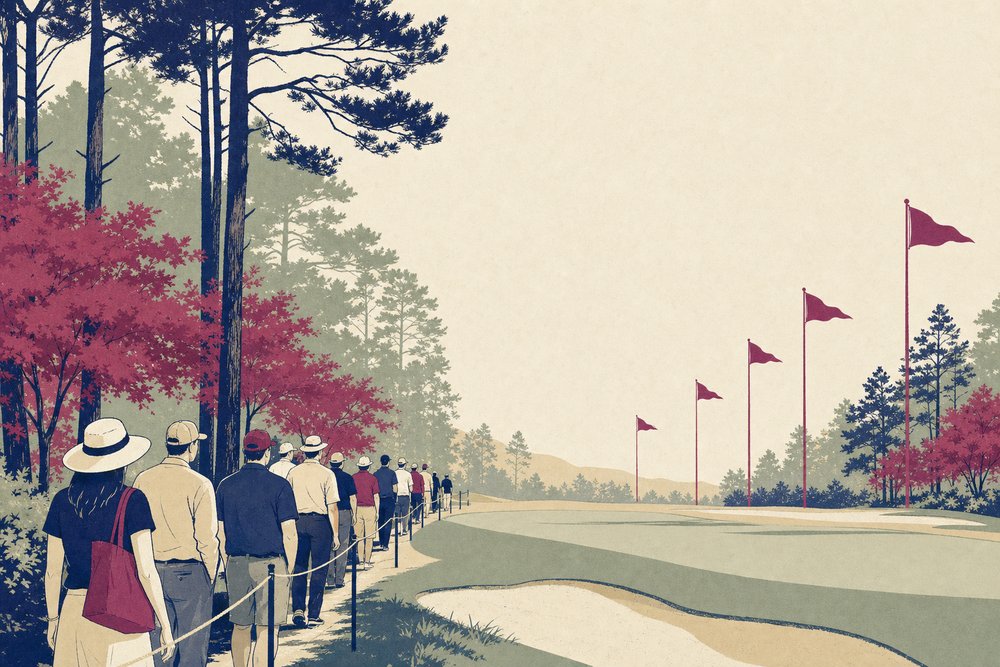
The RBC Canadian Open is the third oldest continuously running national championship in professional golf, behind only the Open Championship and the US Open. It is also, for most of its modern life, the tournament with the worst place in the calendar of any event of its stature.
The calendar problem is the story
For years the Canadian Open sat directly before the US Open, which meant the best players in the world faced a choice between the national championship of a golfing country and their preparation week for a major. Many chose preparation. The field suffered, and the tournament spent decades being described as underrated by people who did not enter it.
This matters to anyone reading the markets, and not as trivia. When a strong field is thinner at the very top than the venue deserves, the pricing changes shape: the favourites are shorter than their true chance because the depth behind them is not there, and the middle of the field is longer than it should be. That is a structural feature of this event, not a weekly accident.
The course rotates, and that changes everything
Unlike most national opens, this one moves. St. George's in Etobicoke, Hamilton Golf and Country Club in Ancaster, Oakdale in Toronto, Glen Abbey for many years before that. These are not variations on a theme. They are different tests that reward different players.
St. George's and Hamilton are classic parkland championship courses, neither of them long by modern standards, both defended by green complexes and by trees that punish a wayward tee shot absolutely rather than proportionally. On that ground, a player who drives it short and straight and controls a wedge is in the tournament. Length alone is not the edge it is at a wide modern venue.
Before looking at a single price, find out where it is being played and what that course asked for the last time it hosted. The course atlas covers both of the regular Ontario venues.
Weather in early June
Southern Ontario in June can deliver a soft, windless week where the scoring goes very low, or it can deliver wind and rain that turn a short parkland course into a genuine test. The difference between those two weeks is several strokes and, more usefully, a completely different kind of winner.
The forecast is published before the first tee time and it is free. In an event with a morning and afternoon split across the first two rounds, a wave that plays in calm conditions while the other half plays in wind is worth more than any statistical model a casual bettor has access to.
How to approach the markets here
This is a tournament where the outright is a poor first instinct and the supporting markets are unusually good. A field where the top is thin and the middle is deep is exactly the shape that favours each-way betting with generous place terms, and it is worth comparing those terms across operators rather than taking the first price you see.
Three-ball markets on Thursday and Friday are the other sensible route. The draw is published, the weather split is visible, and you are comparing three players in identical conditions for one round rather than guessing at four days.
What this page deliberately will not do is name a player and a price. Prices move daily, a published pick ages badly within hours, and a site that prints picks without ever printing its record is selling confidence rather than analysis. The odds page has a calculator that turns any price you are looking at into an implied chance, which is a more durable tool than somebody else's selection.
The Canadian angle
Nick Taylor's win in 2023 ended a drought going back to 1954, and the reaction to it told you exactly how much this event means here. It also produced the kind of pricing that recurs every year since: Canadian players in the field are shorter than their form alone justifies, because domestic money backs them.
That is not a reason to avoid them. It is a reason to know that the price you are looking at already contains a sentiment premium, and to decide whether the golf justifies it. The world golf rankings are a sober second opinion on any home favourite, and the golf betting sites compared on our homepage are where to check whether one book is shading the Canadians more than the others.
Written by
Graham Tessier Senior golf writer
- Golf betting markets and each-way terms
- Course fit and tournament previews
- Club choice and the practice tutorial
Fact-checked by
Nadia Ferreira Fact-checker
- Operator terms and Ontario registration
- Ranking data and tournament records
- Responsible gambling resources
Common questions
Questions on this
01Where is the RBC Canadian Open played?
It rotates. St. George's in Etobicoke and Hamilton Golf and Country Club in Ancaster are the regular modern hosts, with others in the mix.
Because the venue changes, so does the kind of player it favours.
02Why is the field weaker than the tournament's history suggests?
Its calendar position has often placed it beside a major, which forces players to choose between the national open and major preparation.
That thins the very top of the field while the middle stays deep.
03Has a Canadian won it recently?
Nick Taylor won in 2023, the first Canadian winner since 1954.
Domestic money has shortened Canadian players' prices at the event ever since.